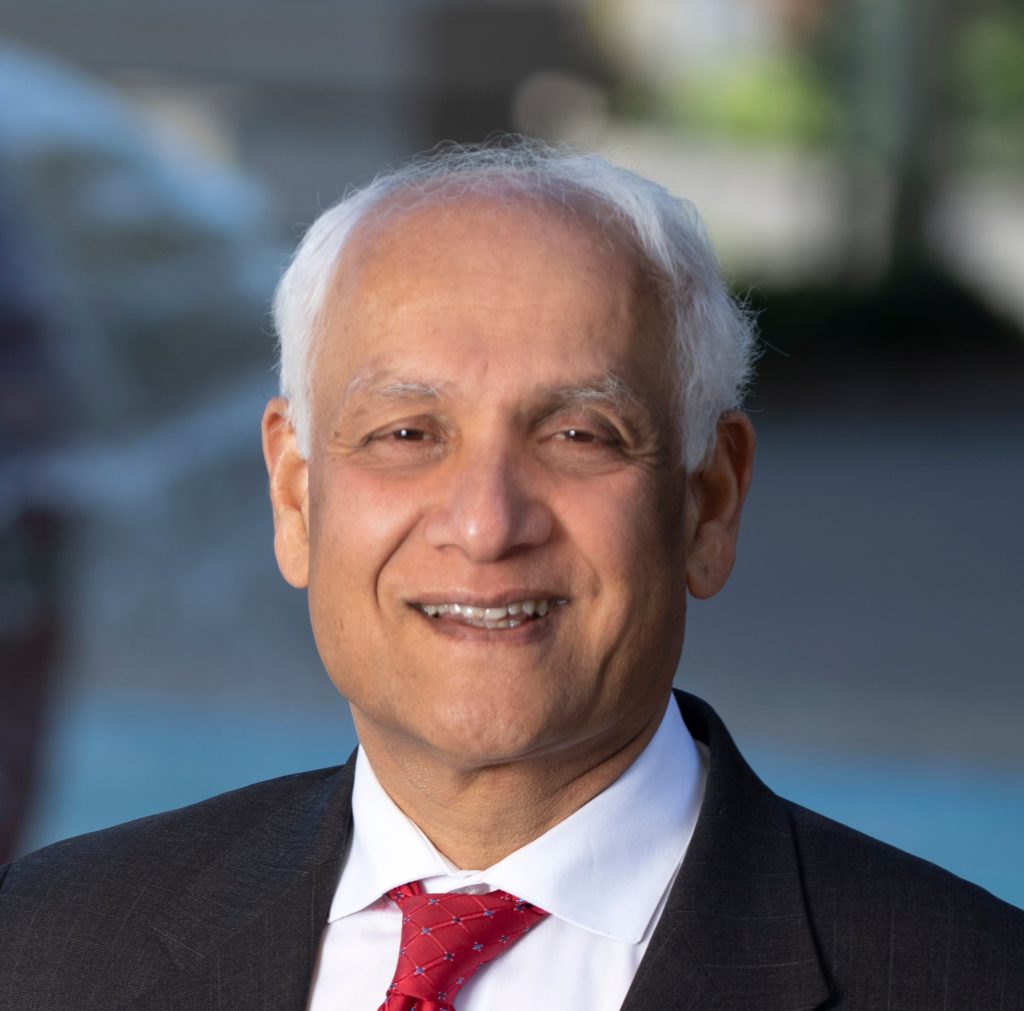
Control meets AI: Automation, Autonomy, and Intelligent Machines
Schedule: Day 1 – Tuesday 23 June 2026
Location: G56, Frederick Douglass Centre, Newcastle
It is not an exaggeration to say that we are witnessing dramatic developments in machine learning and artificial intelligence technologies. Control theory has had and continues to have common goals and intersections with machine learning and artificial intelligence. A major intellectual and technological challenge for the future is how we can the best of what these various fields can offer. In this talk, I will address this question in the setting of cyber-physical systems (CPS). I will describe notions of cognitive CPS as well as Physical AI. I will discuss how we may think about concepts of automation, autonomy, and they can offer guidelines on the future of intelligent machines.
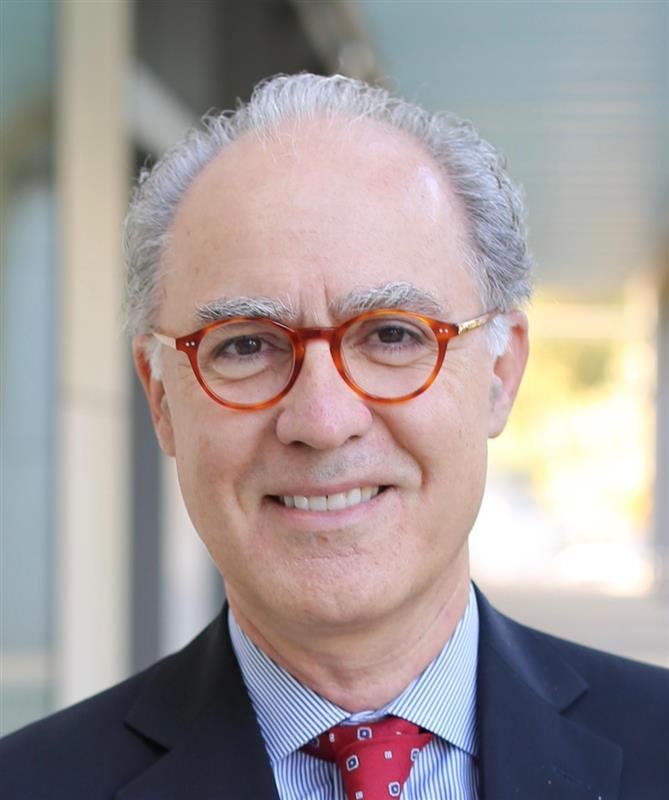
Feedback Linearization in Infinite Dimension: From Exact to Machine-Learned
Schedule: Day 2 – Wednesday 24 June 2026
Location: G56, Frederick Douglass Centre, Newcastle
Feedback linearization (FL), matured in the early 1980s, is arguably the most foundational concept in nonlinear feedback control. FL is a prerequisite for advancing nonlinear control from structural analysis to robust and adaptive design. In infinite dimension, however, FL cannot proceed through conversion to Brunovsky form, since such a transformation diverges. I first present a methodology that yields a convergent transformation to a linear canonical form for hyperbolic PDEs with Volterra-operator nonlinearities. Alas, this exact construction relies on infinite sums, infinitely nested spatial integrations, and the offline solution of infinitely many feedback-gain PDEs posed on domains of increasing dimension. In a sequence of subsequent advances, I first establish robustness of the infinite-series FL under finite truncation, and then introduce neural operators (machine learning) that rigorously eliminate the nested spatial integrations and even bypass the offline PDE solving. Finally, I ask: what if the PDE’s functional parameters are unknown and estimated through online system identification? I show that, with an offline-learned transformation from plant parameter functions to gain functions, the nonlinear PDE can still be adaptively stabilized. In summary, machine learning—with plant-to-gain mappings approximated offline and deployed jointly with online plant learning—enables both practical implementation and theoretical guarantees for control of nonlinear PDEs.

Ontological Robustness for Certification of Autonomous Systems
Schedule: Day 3 – Thursday 25 June 2026
Location: G56, Frederick Douglass Centre, Newcastle
Learning-based control paradigms have seen many success stories with autonomous systems in recent years. A typical architecture in these systems involves layers for perception, planning and control, wherein each of these layers uses different tools and metrics for assessing robustness and performance. For example, the planners — that use vision-based sensors to update the navigation and motion planning — operate largely relying on distributionally robust stochastic optimal control, whereas the low-level controller can be a deterministic controller with its conventional gain and phase (time-delay) margin. We present a new analysis framework for addressing this ontology challenge inherent to autonomous systems. We derive distributional robustness guarantees for deterministic L1 adaptive controllers that can be used by any stochastic planner without facing a language barrier. The combined planner-controller framework can serve as foundation for development of certificates for V&V of learning-enabled systems. An overview of different projects at our lab that build upon this framework will be demonstrated to show different applications.

Quanser
Automatic Control Engineering Network
United Kingdom Automatic Control Council

International Federation of Automatic Control